Innovative Solutions for Seniors

Whether we like to or not, there will come a time when we will need assistive devices. These devices enable us to do things we have a hard time doing without any of these.

Innovative Solutions for Seniors. Source: aesta1

Recently, we had a get-together with my friends since grade school. A classmate came from the United States and treated us to lunch. We had so much fun, but we noticed all the assistive devices our friend needed to have to be able to do this gathering. She had a walker, a cane, and a seat that doubles as a wheelchair.

Some Seniors do not want to use these devices as they worry about what people say if they go around in a wheelchair. They trade safety for their pride. Our friend had no problem using these devices, but we saw her difficulty. She needed people to assist her, too. Please live in a caring country where family takes care of you and makes it easy for you to go around, but it becomes more challenging if you live on your own. Still, having these devices makes life tolerable and safe.

I remember when my husband first used a walker and a wheelchair. The walker enabled him to go to the bathroom and shower independently, which he liked. We had to practice using the wheelchair so he could go around and go for appointments. 

We all know as seniors that the time will come when a cane is in hand. Some of us can get by with an umbrella, but it is less safe than a cane.

 Here are some examples of assistive devices that can help seniors maintain their independence:

Walkers:

Walkers provide support and stability for seniors who have difficulty walking. Seniors can use these indoors or outdoors, and come in a variety of styles and sizes. Choose one you can use indoors to go to the shower or bathroom or around your house.

Canes:

Canes provide support and balance for seniors who have difficulty walking. They are typically used indoors and come in various styles and materials. Many of my Senior friends use canes outdoors. It is easy to carry. Sometimes, they use an umbrella, but a cane has better stability.

Wheelchairs:

If you are a Senior and cannot walk, use a wheelchair. Wheelchairs come in various types, including manual wheelchairs, power wheelchairs, and scooters. 

I don’t know why some Seniors refuse to use a wheelchair. My mother did not want to use so we can’t bring her out. She refused to be seen in a wheelchair by her friends. We assured her her friends would be happy to see her and won’t mind the wheelchair. 

Mobility scooters:

Mobility scooters are motorized vehicles, so Seniors can go wherever they want. They can get groceries, go to appointments, and enjoy driving. They are typically used outdoors and come in various sizes and styles.

Bathroom safety equipment:

Bathroom safety equipment can help seniors prevent falls in the bathroom. This equipment includes grab bars, shower chairs, and raised toilet seats. It’s good to see many disabled Seniors go around in it. 

Home medical equipment:

Home medical equipment can help seniors manage their chronic conditions. This equipment includes blood pressure monitors, glucose meters, and oxygen tanks. I remember having an oxygen tank at home when my mother was not well. 

Communication devices:

Communication devices can help seniors who have difficulty speaking or hearing. These devices include amplified phones, captioning devices, and speech recognition software. Seniors living on their own can benefit from these devices.

Personal emergency response systems:

Personal emergency response systems (PERS) can help seniors call for help in an emergency. These systems typically include a base unit connected to a landline phone and a wearable pendant or wristband that the senior can wear. If the old presses the button on the pendant or wristband, the base unit will call a monitoring center, which will then dispatch help.

Of course, you can pay for help 24/7 or stay in an assisted living place. However, if you want to stay home, which many Seniors prefer, and live a close to everyday life, these devices will help you. Our wish is that you won’t need any of these. But if you do, use it well.

The Benefits of Direct Flights for Senior Travellers

As winter approaches, my friends and I prepare for our winter trip. Often, this involves discussing what flights to take, which airlines to choose, and whether we take direct versus connecting flights.

As winter approaches, my friends and I prepare for our winter trip. Often, this involves discussing what flights to take, which airlines to choose, and whether we take direct versus connecting flights.

For years now, I have avoided the direct route because only one airline offers it, and I have no desire to choose such an airline. This year, however, I changed my mind. I felt the urge to experience this direct flight.

Flight. Source: aesta1

This direct flight takes almost seventeen hours. This length was the reason why I have always avoided it. I did not want to be on the plane for that long.

However, I took the plunge his year, and the experience surprised me. I’m used to flying, so going on connecting flights has always intrigued me. I like exploring different places and experiencing new cultures, even though it’s limited to airport lounges.

Indeed, I was pleasantly surprised. When I checked in at Terminal 3 in Toronto, I discovered the airline could tag my luggage to my final destination, about an hour from Manila. Because the connecting airline was theirs, the staff also gave me my boarding pass for that flight. 

As we boarded, I saw the long line of wheelchairs. I saw that this flight was a favourite for many Seniors. The more I talked to some of them, the clearer it became to me why many seniors chose this flight. Here are some of their reasons:

  • Reduced Stress: Changing planes can be stressful and tiring, especially for older individuals. Direct flights eliminate the hassle of navigating airports and catching connecting flights, reducing travel-related stress. Most connecting flights in the country are by the same airline, so they facilitate the luggage transfer. Their staff was in the baggage conveyor belt, and all I did was point at my luggage, and they took care of transferring it to my local flight—no stress. With no bags to worry about and having my boarding pass, I took my time, exchanged some local currency, and took the shuttle to the next terminal. Before the flight, I was worried about transferring my heavy bags, especially getting them out of the conveyor belts.
  • Physical Limitations: When I saw the line of wheelchairs, I realized that many Seniors experience mobility issues, and a direct flight helps minimize the physical strain associated with changing planes, walking long distances, or managing heavy carry-on luggage. Thus, many ask for wheelchairs, but I want to move around freely and walk a bit before the flight. I thought of asking for assistance but was glad I did not. The Philippine Airlines direct flight from Toronto to Manila reduced the stress. 
  • Medical Considerations: For seniors with certain medical conditions, prolonged sitting and potential exposure to germs during layovers can pose health risks. The same chances are there during long flights, but you are with the same people the whole time. Direct flights reduce the duration of travel and the associated health concerns. The year before, I had a layover of over seven hours at a time when the Lounge was closed, and aside from Starbucks, only a little was open at the airport. I vowed not to do that again.
  • Predictability: My personal experience showed me that direct flights offer a more predictable travel experience, with a single departure and arrival. I found this very comforting. Once seated on the plane, I relaxed, knowing where I would be after 17 hours. It was a straightforward, less complicated journey.
  • Time Savings: Traveling on direct flights means less time spent in transit, which can be especially beneficial for Seniors who may prefer to minimize prolonged travel periods and maximize time at their destination. Because of the reduction of much of the stress, I arrived happy and ready to go.

So, talking with my friends, I changed my tune. One hesitated to take this flight because she feared the bathrooms would be dirty after a few hours. Not so, as the staff regularly clean them. 

Direct flights are often more expensive, but with reduced stress, it is worth it, especially for older people.

After experiencing this flight, I will not take any other. I talked to some passengers in the Lounge, and they all paid more money to be on this flight, but they still preferred this direct flight. They are primarily seniors, so this is the most preferred route for older adults. 

Closing Chapters in My Life

Closing the cottage is an annual ritual we go through. It always brings mixed emotions. Of joy we had that summer but also sorrow that we’re leaving it soon and not seeing it for months. After that weekend, my mind wandered to the many chapters in my life that must be closed. I need to revisit them one more time and gently close the doors.

A Chapter in Life. Copyright: aesta1

I do this so I can move on. I have seen friends older than I am stuck in some chapters of their lives and can’t seem to move from there. Repeatedly, they would return to the significant people and events there, focusing their interest on those.

Many Seniors are not able to get out of those. They get stuck often because very little happens in their lives. My older friends and I often laugh at our appointment calendars as they only include doctor’s visits as the most significant event of that month.

When we’re young, we’re busy experiencing things and collecting memories, not remembering them. I know it’s time to let go and have closures in some of my life’s charters. I thought about how to do this. 

I know I have ignored some of these chapters and fear visiting them. Can I handle what comes out of some of these boxes? They’re like boxes in storage; when you open the door, they start falling off, leaving a mess all around. So, I hesitate, but the all is there, and I can no longer ignore it. I need to close these and move on with my life, looking forward to the future.

So, I start by reflecting on which chapters to handle first. Some are easy to accept. I thought about the lessons I have learned from the experience, the growth that took place in me, and the wisdom I have gained from those experiences. Listen to the emotions that arise as you reflect on the chapter. Feel its expression. It helps to talk to a friend with you in that chapter. She can offer a different perspective to help you accept the people and events that confront you from this era. In your journal, write down some of your experiences, noting in particular the attachments that still tie you to this chapter. Continue reflecting on it and slowly accept things that you have ignored before. Then, let go. 

Letting go is often difficult, especially when the attachment to the person or event in that chapter is solid. Create a ritual such as burning letters, pictures, or other significant objects that tie you down and stop you from letting go. Cut the attachment. There is always pain, but this is part of the process. Release your wings as you go through the pain.

Embrace the possibilities now facing you, having freed yourself from the attachment. In my own experience, I have difficulty letting go when I get stuck in friends. I fail to appreciate the new friends that come my way. Only when I let do, I see the new ones coming my way. 

Closing chapters in our lives is a process, not a one-time event. We keep reflecting, accepting, and letting go. A wise sister told me in the past that I could only let go of something once I had taken it as my own. So, owning and letting go continues and embracing possibilities and new chapters. Such is life. Keep living.

Kyoto for Seniors

Kyoto captivated my imagination when two other Senior friends visited the city last year. It’s a trip to Japan’s history and an experience of its rich and unique cultural heritage.

We stayed in a Ryokan, a traditional Japanese hotel, which was an experience of Japanese hospitality. A young couple with experience in Europe owned it and welcomed us like guests in their own homes. We arrived, and as usual, they received us with tea slippers and cleaned our suitcases before bringing them to our room. It is a regular practice in Japan, as in many other Asian countries, to leave your shoes at the doorstep and use slippers. Not only do you go the dirt from outside, but it’s also an expression of respect to the homeowners.

After the check-in, we went to our room, which was quite spacious for the three of us. The bathroom was big, so it was easy to move around, and the seating area provided a perfect place for us to hang out after a busy day. 

Our first outing was to a traditional Japanese restaurant. We wanted to taste Japanese dishes that we enjoyed in our own countries. To our delight, the restaurant did not disappoint us but brought us a taste of what truly is authentically Japanese. 

Our guide picked us up the next day to explore some of Kyoto’s famous attractions. We booked a tour just for us, and it’s very affordable because we shared the expense. For Seniors, I recommend this as you could go at your own pace rather than be catching up all the time with a more extensive group tour. We had a very knowledgeable guide who brought us to these famous attractions:

  • Araashiyama Bamboo Grove: A serene bamboo forest that provides a unique atmosphere for a peaceful stroll.
Bamboo Forest. Copyright: aesta1

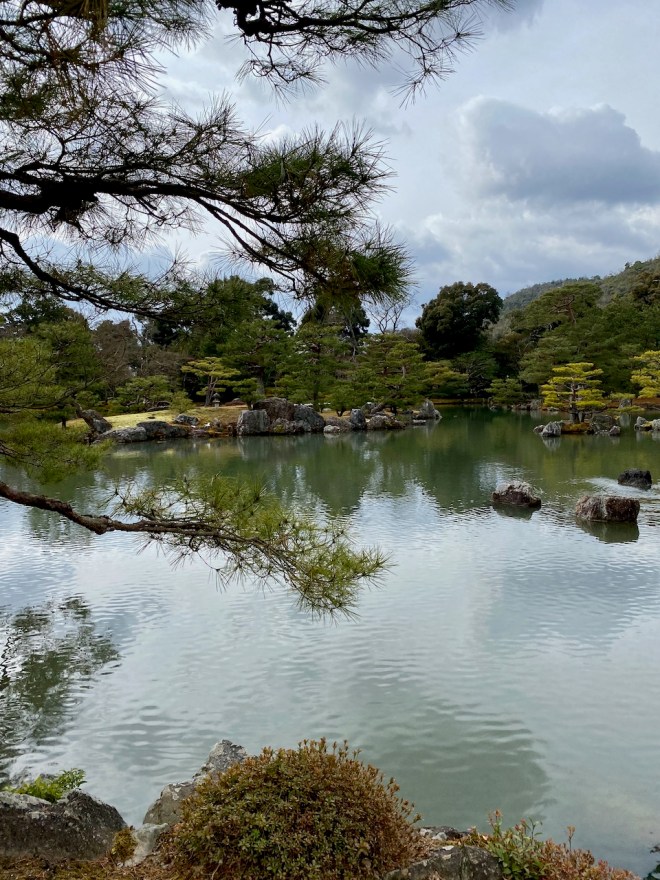
  • U Kinkaku-ji (Golden Pavilion): A Zen Buddhist temple covered in gold leaf, surrounded by beautiful gardens.
  • Fushimi Inari Taisha: Famous for its thousands of vibrant red torii gates that lead to the sacred Mount Inari.
  • Kiyomizu-dera: A historic temple offering panoramic views of Kyoto, especially during cherry blossom and autumn foliage. 
  • No Gion District: Known for its traditional wooden machiya houses and being the center of the geisha culture. Our guide brought us there and left us to explore the place. Geishas are walking the streets, but visitors can no longer take pictures with them as they’ve been harassed in the past, hurting them seriously sometimes. 
Traditional House. Copyright:aesta1
  • Nijo Castle: A UNESCO World Heritage site with beautiful gardens and historic buildings, including the famous “nightingale floors.”
  • Ginkaku-ji (Silver Pavilion): A Zen temple known for its stunning gardens and a unique dry sand garden.
  • Katsura Imperial Villa: An exquisite example of traditional Japanese architecture and gardens, often visited through guided tours.
  • Philosopher’s Path: A scenic walking path along the canal with hundreds of cherry trees, gorgeous during spring.
  • Nishiki Market: A bustling food market with various stalls offering fresh seafood, local produce, and Kyoto’s traditional snacks.

We left days to explore the city and soak in its charm. Jaded with metropolises that look exactly like each other, Kyoto, with its traditional feel, gave us an experience distinct from visits to other cities. 

So, for Seniors thinking of going to Kyoto. Drop your hesitation and go. It’s easy to explore and quite affordable. 

Enjoy your time exploring Kyoto!

Tokyo for Seniors

Tokyo, the vibrant capital city of Japan, offers a captivating blend of modernity and tradition. While it is often associated with its bustling streets, advanced technology, and youthful energy, Tokyo has much to offer senior visitors.

Tokyo.Copyright:aesta1

But before embarking on your Tokyo adventure, research attractions and activities that cater to your interests and physical capabilities. Make a list of must-visit destinations and create an itinerary accordingly.

Look for hotels or guesthouses that provide accessibility features such as ramps, elevators, and rooms designed with senior comfort in mind. Because we visited immediately after the Covid lockdown, hotels went out of their way to make our stay very comfortable. Although with the Japanese predilection for perfection, you will surely get the best treatment in any hotel.

Many hotels also offer concierge services to assist with transportation and tour bookings. I suggest you take a guided tour of the city on your first day. It is not expensive to book a tour in your language; doing this on your first day gives you an idea of where you want to spend time during your visit.

Copyright:aesta1

Some of Tokyo’s attractions that are worth visiting are:

– Tokyo’s Cultural Gems like Peaceful Gardens, where you can take a stroll through exquisite gardens like Shinjuku GyoenRikugien, or Hama-rikyu. These serene oases offer tranquillity amid the bustling city, perfect for unwinding and appreciating nature’s beau- Historic Temples and Shrines like Senso-ji in Asakusa or Meiji Shrine in Shibuya, where you can experience the spiritual atmosphere, admire the stunning architecture and even partake in traditional rituals like washing hands and offering prayers.

– Tokyo’s Neighborhoods, such as Asakusa, where you can glimpse old Tokyo with its narrow streets, market stalls, and historic temples. Also, explore Nakamise Shopping Street, known for its traditional snacks and souvenirs. Go to Ueno, which houses several museums, including the Tokyo National Museum. In the Spring, you can relax under the cherry blossom trees. 

For upscale shoppers, head to Ginza, famous for its luxury boutiques, department stores, and gourmet restaurants. Enjoy window shopping, savour a cup of tea at a traditional tea house, or catch a performance at the Kabuki-za theatre.

– Tokyo Skytree. Ascend the world’s tallest tower for breathtaking panoramic views of the city. The observation decks are easily accessible via elevators with facilities for wheelchair users.

– Odaiba: This futuristic island showcases architectural wonders, shopping malls, and entertainment venues. The Rainbow Bridge connects it to the mainland, and there are accessible waterfront promenades for pleasant walks.

Copyright:aesta1

For relaxation and wellness, explore these places:

– Hot springs: Experience the therapeutic benefits of Japanese hot springs, or “onsen.” Odaiba Ooedo-Onsen Monogatari and Spa LaQua are popular options that offer a variety of bathing facilities, relaxation areas, and rejuvenating treatments.

-Traditional tea houses: Indulge in the tranquillity of a traditional tea ceremony. Many tea houses provide tatami mat seating and are accommodating to seniors.

For ease in moving around the city, choose accommodations near Tokyo’s subway stations with elevator access, and always ask your hotel for the closest station to your intended destinations. Taxis are widely available. Look for taxis with “Universal Design,” as these are accessible for individuals with mobility needs.

Our Japanese friend assured us that most Japanese understand and can speak English but are hesitant. However, if asked for help, they are always willing to be of service.

During our visit, we used the subway and train system in Tokyo and from Tokyo to other cities in Japan, and we found it very easy to navigate. It’s very comfortable and always on time. The stations also have stores and restaurants catering to varied food preferences. 

For ease in moving around the city, choose accommodations near Tokyo’s subway stations with elevator access, and always ask your hotel for the closest station to your intended destinations. Taxis are widely available. Look for taxis with “Universal Design,” as these are accessible for individuals with mobility needs. Our Japanese friend assured us that most Japanese understand and can speak English but are hesitant. However, if asked for help, they are always willing to be of service.During our visit, we used the subway and train system in Tokyo and from Tokyo to other cities in Japan, and we found it very easy to navigate. It’s very comfortable and always on time. The stations also have stores and restaurants catering to varied food preferences. 

Copyright:aesta1

Contrary to our expectation that Tokyo is an expensive place, we found that we could find prepared meals at Family Mart, Lawson, and other convenience shops that were tasty and inexpensive. Once in a while you could splurge and enjoy a Japanese meal in one of Tokyo’s famous restaurants.

You will enjoy experiencing Tokyo’s unique flavour and culture. The city welcomes Seniors and makes it easy for them to move around. We enjoyed our visit so much that some of us are returning this year. 

How Do We Integrate Mindfulness into Our Lives?

Still Nature Scene. Copyright: aesta1

In the previous post on mindfulness, I focused on mindfulness and its benefits for us, Seniors. This post will outline mindfulness techniques we can easily incorporate into our daily lives to cultivate a greater sense of present-moment awareness and well-being. I included here the ones that I have tried to practice:

1. Mindful Breathing

Paying attention to your breath is a fundamental mindfulness practice. You can do this easily while doing your everyday chores. All you have to do is to find a comfortable position, close your eyes, and bring your attention to the sensation of your breath as it enters and leaves your body. Become aware of the rise and fall of your abdomen or the feeling of air passing through your nostrils. Whenever your mind wanders, gently bring your attention back to your breath.

2. Body Scan

This technique involves systematically bringing awareness to different parts of your body. Starting from your toes and moving upward, gently scan your body, noticing any sensations or areas of tension. As you do this, keep a non-judgmental awareness of each part of your body. Allow any feeling to be present and be present to it. Do not try to change any of them.

3. Mindful Observation

Choose an object or element from your surroundings, such as a flower, a piece of art, or a scene in Nature. Direct your attention to that object and observe it as if you’re seeing it for the first time. Notice its colours, shapes, textures, and any other details. Engage all your senses and fully immerse yourself in observing that object.

4. Walking Meditation

Walking meditation is a way to practice mindfulness while moving. Choose a quiet space and amble, paying attention to each step and the sensations in your feet as they make contact with the ground. Feel the energy from the ground under your feet. 

Notice the movements of your body and the environment around you. If your mind wanders, gently guide your attention back to the sensations of walking.

5. Loving-Kindness Meditation 

This practice involves cultivating love, compassion, and kindness towards oneself and others. Start by sitting comfortably and bring to mind someone for whom you have warm feelings. Repeat phrases such as “May you be happy, may you be healthy, may you be safe” while genuinely extending those well-wishes to that person. Gradually expand your circle of well-wishing to include yourself, loved ones, neutral individuals, and even difficult people. I often light a candle for the person I want to send love to.

6. Mindful Eating

While eating, take a moment to slow down and fully engage your senses. Notice the colours, smells, and textures of your food. Chew slowly and savour each bite, paying attention to the flavours and sensations. Be present with the entire eating experience, from the moment you pick up your food to the moment you finish.

Remember that mindfulness is a practice, and it’s normal for your mind to wander during these exercises. The key is gently bringing your attention back to the moment without judgment. As you integrate these techniques into your daily life, you’ll gradually develop a greater sense of mindfulness and present-moment awareness.

A Senior’s Memory-A Poem

The tremendous power
Of memory unearth
Life’s incredible wealth
Fill the minds of Seniors

A Senior Reciting Rhodora

I thought of my friend,
Who recited Rhodora
A poem we learned when
In high school

That night my sister and
I searched the internet for all
The classic poems we’ve learned
Through years of literary exposure

Longfellow, Emerson, Gray, Allan Poe
All came to mind
With Shakespeare’s sonnets too
Even Flanders field inserted itself

Words came back
More to my sister than me
She has always been the literary
In the family

And feelings came as memories claimed
It made me wonder why some I remembered
And others I could not
Like the poem Rhodora
Our friend recited

Our minds are tricky,
Playing with our memory
Some things we remember and
Some we forget

Indeed our memory we treasure
As Seniors think they start fading more
But it’s because our memories of yore
Crowd our minds with so much lore.

Revisiting Your Roots

I used to visit my home province, but only sometimes and only for short periods. Thus, I couldn’t explore the changes since I was a child growing up in this place.

Revisiting Your Roots. Copyright: aesta1

This time, I decided to stay on for four months, and after a month, yes, it took me a month to settle down and fully appreciate the experience of being a local again, not just a foreigner visiting another place.

Even inserting back into my family again, knowing the new members and seeing the growth in each one is a bit baffling. Sometimes, it is hard to comprehend how some people can change so much, but they do. The dynamics have changed, too. It is interesting to watch and find out what role I can play, especially in celebrations they have done without me for many years.

It used to be that I was only visiting, and everyone tried to accommodate me, knowing that I would be gone in a week or two. These days, it is different. I am putting down roots again, which shows continuity. I am reestablishing relationships to which I have not given any attention for years, knowing my former friends and relating with them again. I have changed, and they, too, have changed. It is interesting how this plays out.

Some have detached themselves from the group, but many try to be part of the interaction. We visit each other and organize activities to bond once more and refresh our memories of things we used to enjoy. Some have passed, and we hold masses for them lest we forget. It is sad because, at our age, we face our passing daily.

We had our Christmas party this year, and I hosted it, but each one brought food. It started at nine and ended at 5. I thought at first, what are we going to do? Time was even lacking for other things we wanted to do. It’s as if we were in high school once more.

Those who had not attended other previous celebrations enjoyed themselves so much that they promised, from now on, to be in all of the gatherings. They had so much fun that they wanted to experience it again. We forgot ourselves, and we were children in the playground of the past, playing, shoving, dancing, singing, showing our talent, and taunting each other. We were together our whole childhood but lost touch after high school graduation.

The years of building a career and raising families have left our relationships without attention. Only when the kids had grown did we find time to connect again. This connection strengthened when we saw each other at our golden jubilee, 50 years after graduation from high school. Many of us had not seen each other or talked to many.

Strengthening these connections gave us so much joy that we tried to gather whenever there were occasions to celebrate or gather. We always find reasons, of course, especially when some who now live in other countries come home. These were occasions to connect, celebrate, and share whatever we had, even around snacks in the afternoon.

Gathering of friends. Copyright: aesta1

These occasions always lead to reminiscing about our childhood days, what we remembered and what news we received about our classmates and friends. We often learn about the families in our town since childhood. Some information brings joy, some pain, and others, sorrow, but whatever they are, they are always welcome. If the persons are around, they will get congratulated, praised, reprimanded, or sternly talked to, depending on what is shared.

Because we grew up and knew each other’s families, we feel free to react to the sharing as in a family circle. We could be brutal among friends who have grown up together because we are secure in our care for each other. It is such a comfort to be with people one could be one’s self.

Our roots are solid. We belong to the same town knowing the same families. We knew each other’s families and shared our joys, frustrations, and pains. Going back to one’s roots is a very comforting experience. If you still need to do this, start now.

Lessons My Garden Taught Me

Patola with Fruits. Copyright: aesta1

Little did I know that starting this garden would yield not only produce but lessons that I keep learning every day.

I started this garden because I love to putter around a garden early morning with my cup of coffee in one hand and a song in my heart, looking at every plant’s daily changes.

As the garden progressed, things kept changing. The changes are not only in the plant’s growth but also in people directly or indirectly involved in the garden.

I was the only one interested in having this garden. I had no idea I started something several in the family love to be involved in. So, this is the first lesson I learned. At that time, my husband and I were still working and could not take substantial time to be in the garden. Other family members took the lead, and I gave up designing and landscaping my garden.

The first time this happened, I resented it. However, I was realistic enough to know that time was not with me. Other people have the interest, the workforce, and the time.

Because of this, the garden expanded and grew beautifully. Different people used it for their interests, so the garden became a series of beautiful memories. At one time, sunflowers filled it, becoming the setting of celebrations and photo opportunities.

These days, plots of different kinds of vegetables grace it, yielding produce for our consumption and the market. The garden is now earning little to defray its maintenance and development expenses.

Black Beans and Corn. Copyright: aesta1

One of the lessons I have learned is that a garden requires time and presence. In the Tropics, where plants grow or die fast when not watered, you must keep your watch or lose some expensive plants. Until the plants take root, you must give them care.

When the plants start producing, your job is not over. They come in abundance that you can hardly harvest them at their peak. There’s a time when they’re just suitable for cooking. Not too ripe or mature and not too young. The gardeners also told me that with some plants, you couldn’t leave the fruits to mature on the vines as that would stop them from growing new shoots. When the plants are healthy, the produce is so abundant that you can’t eat them all, so you need to share or sell them. I was appalled one day when I spent hours harvesting string beans, and all the vendors paid for it when I sent it to the market was a little less than $2. So two hours or probably more of my day was only worth that much? I was discouraged, but the benefits of eating fresh produce gave me hope and a new resolve.

Squash and Okra. Copyright: aesta1

There is satisfaction in having your garden. Every morning, I watch for new blooms, shoots, or fruits. In the tropics, it is fast to grow native varieties.

Aside from eating fresh produce, I get to help others. One of these vendors comes regularly, and she picks the vegetables she would cook and sell for the workers at the irrigation close to us. She has eight kids and a husband who cannot support the family. But this lady wanted all her kids to go to school and earn degrees later. So, she does whatever she can to achieve her dream. She picks up what she wants and gives our gardener a fair price when she comes. Sometimes, she has only so much money, and she would tell us she’ll share more next time.

Do I bother? No, I am happy that this person works hard to improve her life and that of her children.

So, we keep investing in the garden, giving us produce and joy. We couldn’t be happier.

Losing Is Part of Living

I lost an article I worked on for hours and am distraught. I felt inspired to write that article. I was happy about it, but it got lost in the process of posting it. I got angry at myself. I had only my stupidity to blame. Or my ignorance or carelessness.

Trillium. Copyright: aesta1

I took time out to escape the state I was in when I lost it. Many tries at retrieving it frustrated me that the only way left for me was to give it up, let it go, and start anew.

As I relaxed more, I reflected on it. Losing is so much a part of our lives. It happens almost every day. We lose an object we like, our pet dies, or someone takes our plant. The worst is when a loved one passes on to another life. It leaves us angry, disappointed, afraid, or empty. 

I sat down again to write, hoping to recapture the article. I know this is only my way of dealing with the unfortunate situation, but it will not return. I must let go and keep living and creating something new and different. Instead of moping and thinking of the lost one, I focused on creating something new. Yet, the loss kept coming back. The feeling of anger is still there. The disappointment prevents me from thinking. I knew I had to give it time to let it go. It is gone. It is not gone to me, though. 

Losing is a daily occurrence. I thought over 70 years that I would be a pro at this pattern of accepting and letting go. No, every event is new. Every event makes me go through the process once more. Is there ever an end to this. Will I ever grow muscles to let go when I lose someone or something quickly? 

People tell me to keep myself busy. I’m trying to do that, but the struggle between the loss and the new creation gives me a headache. It continues to play in my mind. Ah, the mind. It refuses to let go. 

The only way is for me to quiet my mind down. I can’t fight it. I can only allow its unfolding process or go beyond it. I know I am not my mind, Nor am I my body. I am not the things I lost. No matter how precious they are, they are not me. They are their own. I need to set them free so that they can be. I am my being, and letting them go, allows me to be.

It is this being that I need to be in touch with, to be in its core, so I don’t get lost when I lose things. I know this truth, but each loss brings it back for me to understand it fully. Each day, I need to remember that losing is part of life.

I can watch the unfolding of things, including the loss, and let it be. Being in Me is an anchor. I am.